


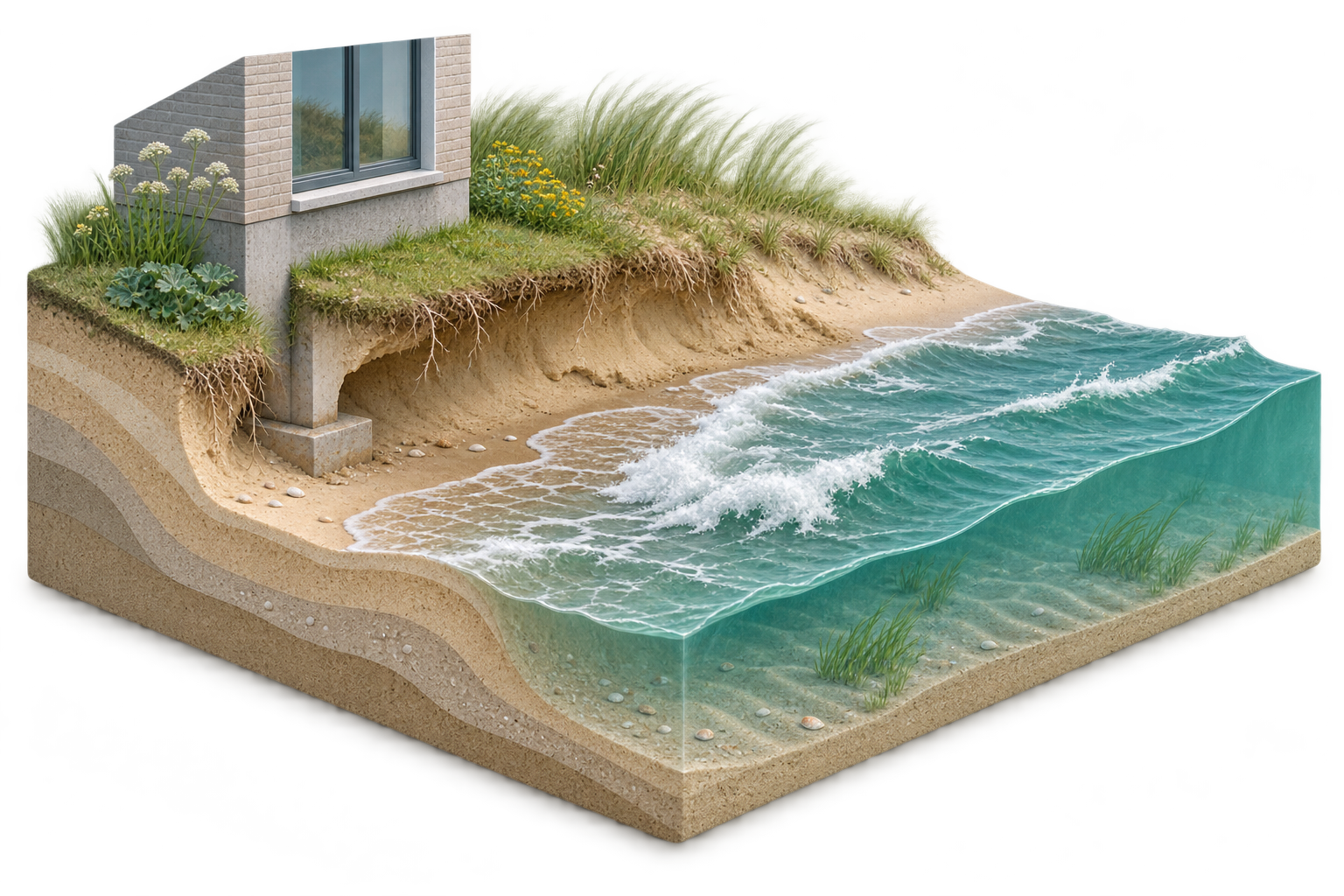
Erosion
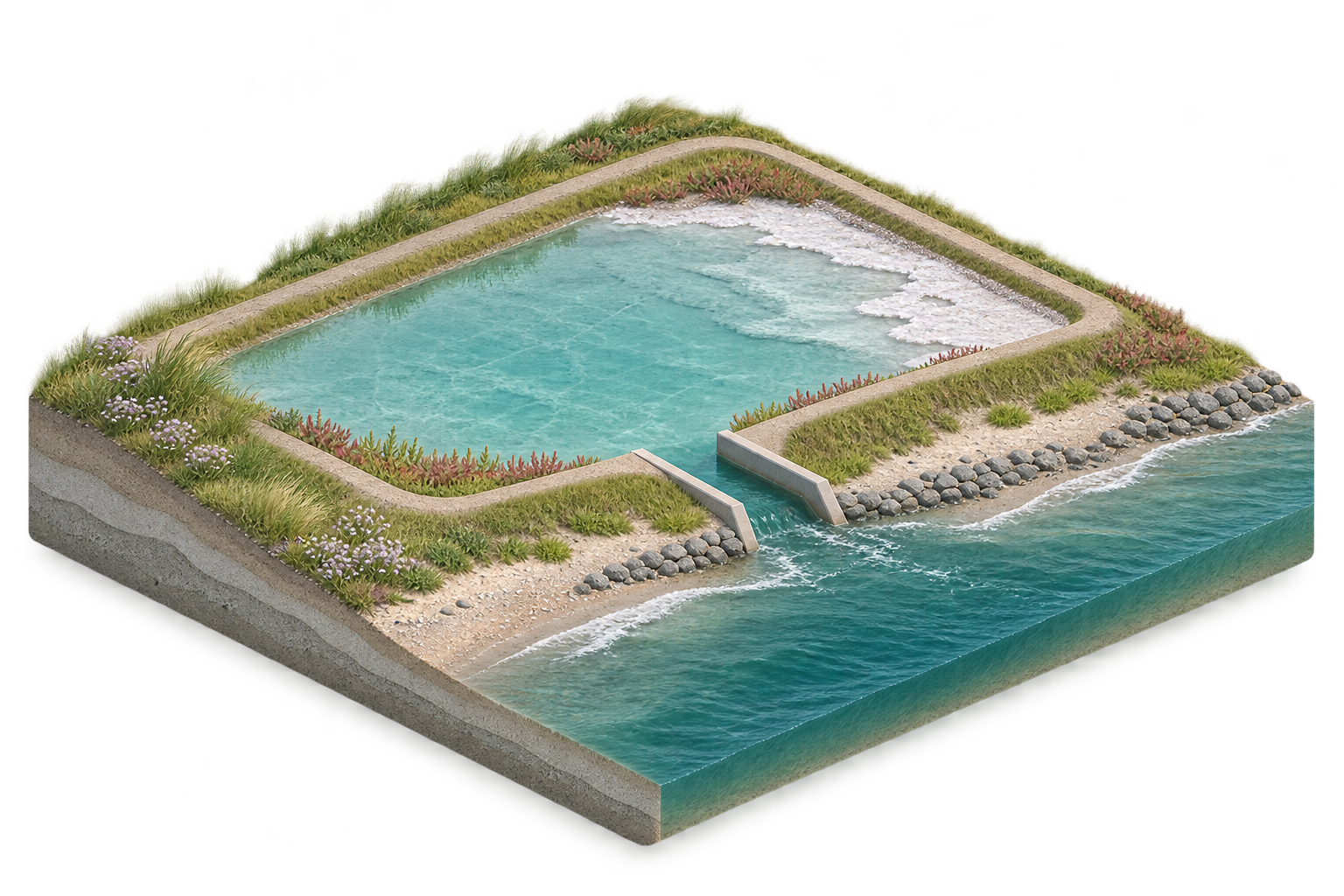
Waves, currents and local scour can undermine shorelines and marine infrastructure. Assess the seabed, sediment movement and the protection needed.
OCEANUS INTERNATIONAL · ENGINEERED MARINE SYSTEMS
Contain. Stabilize. Protect.
Steel-free polymer gabions and mattresses for coastal, port and saline environments. Engineered around your site, your fill and your project.
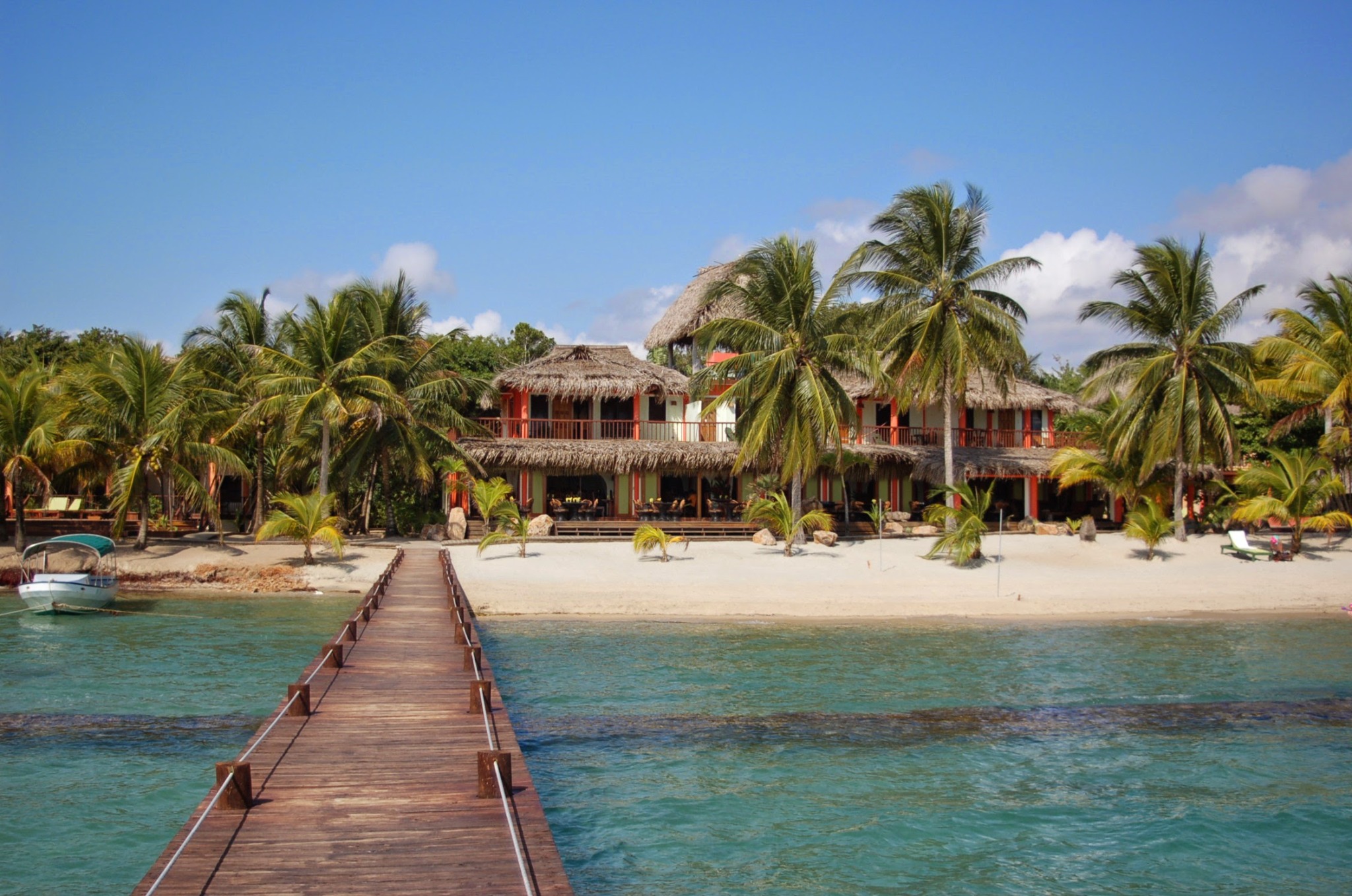
Explore where Marine Gabion® baskets and mattresses can be assessed for your project.
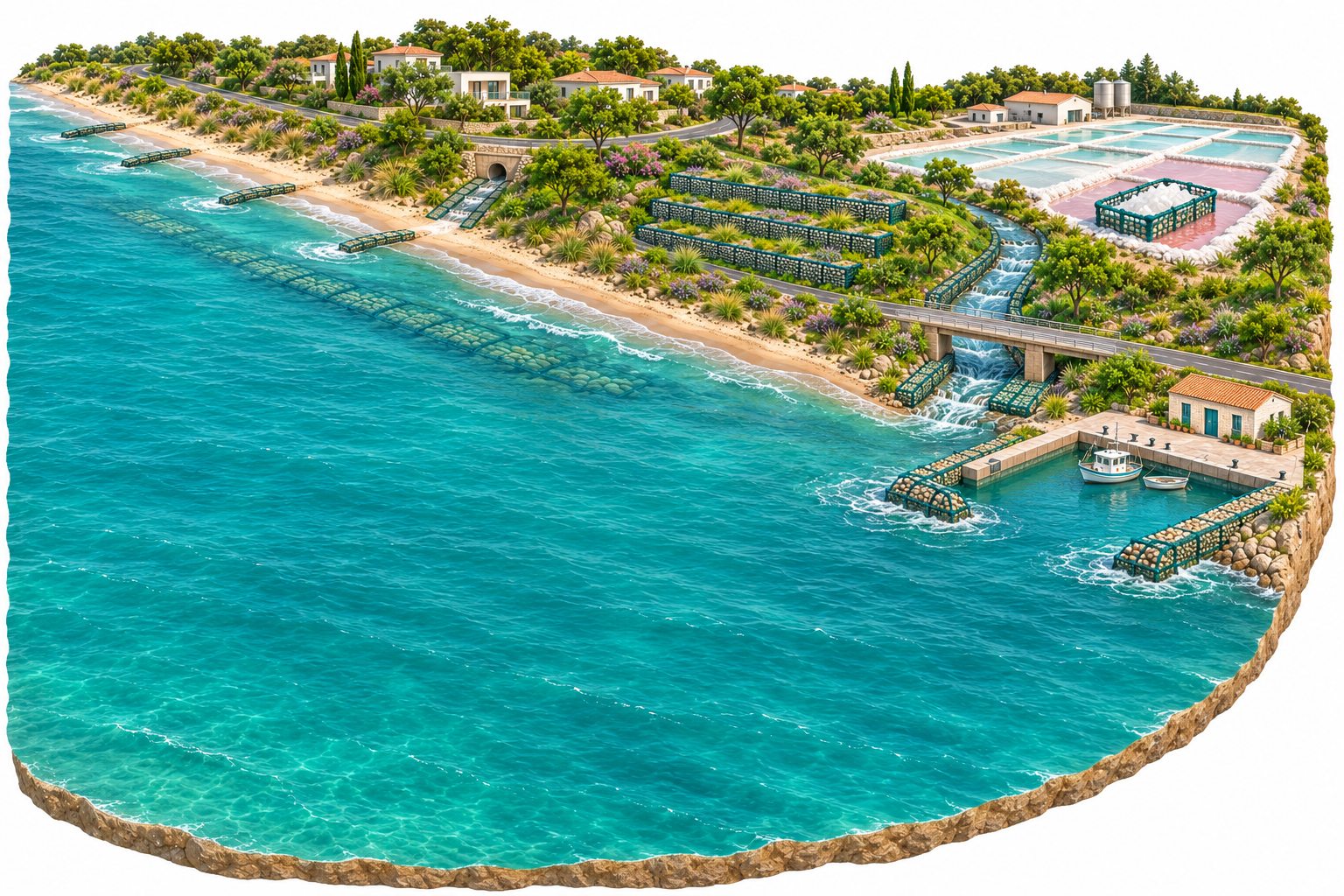
Assess gabion groynes, low structures and toe protection against local waves, currents and sediment transport.
Assess quay toes, harbor slopes and bed protection for vessel loads, propeller wash and site access.
Design mattresses and transitions around bridge piers, culverts and exposed foundations for local scour.
Combine bank protection with an appropriate filter, stable toe and transitions at the waterline.
Design stepped retaining structures for ground conditions, drainage and global slope stability.
Assess channel linings and outlet aprons for flow velocity, uplift, abrasion and filter compatibility.
Oceanus customers have used these gabions in ports and salt mines, including units filled with salt in supersaline solution. For each application, assess the actual solution chemistry, temperature, fill retention, joints, abrasion and operating loads.
Illustrative application concepts. Suitability, geometry, fill and installation require project-specific engineering.
Start with the environment. Then choose the right containment system.
Waves, currents and local scour can undermine shorelines and marine infrastructure. Assess the seabed, sediment movement and the protection needed.
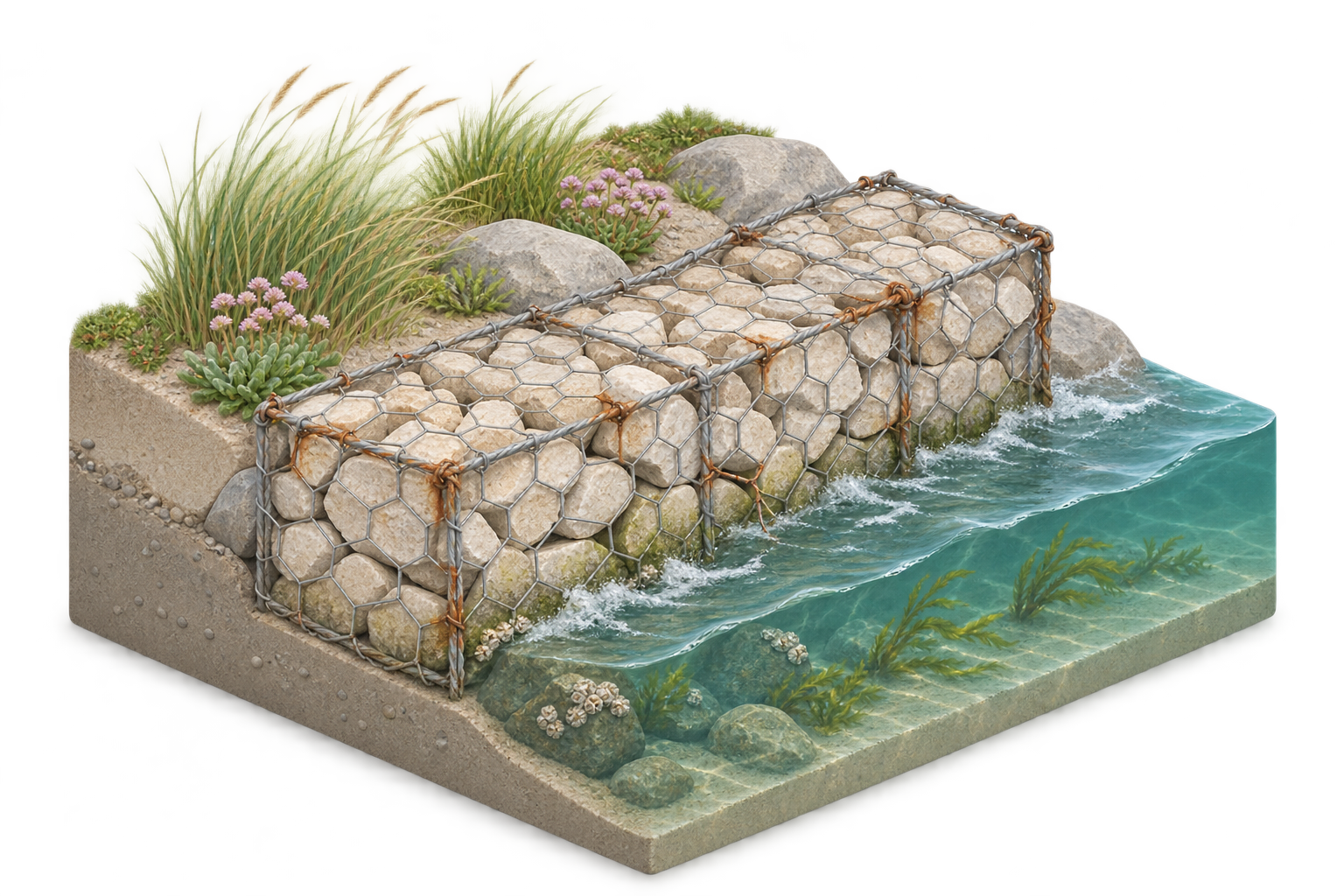
Steel wire can corrode when saline exposure exceeds its protection. Marine Gabion® uses a polymer enclosure with no steel to rust.
Oceanus customers have used these gabions in ports and salt mines, including units filled with salt in supersaline solution. For each application, assess the actual solution chemistry, temperature, fill retention, joints, abrasion and operating loads.
A steel-free enclosure addresses steel corrosion. Long-term durability is designed through material selection, abrasion protection, connections, installation quality and maintenance.
Choose a gabion or a low-profile mattress. Select grade 200 or 300 through the project design.
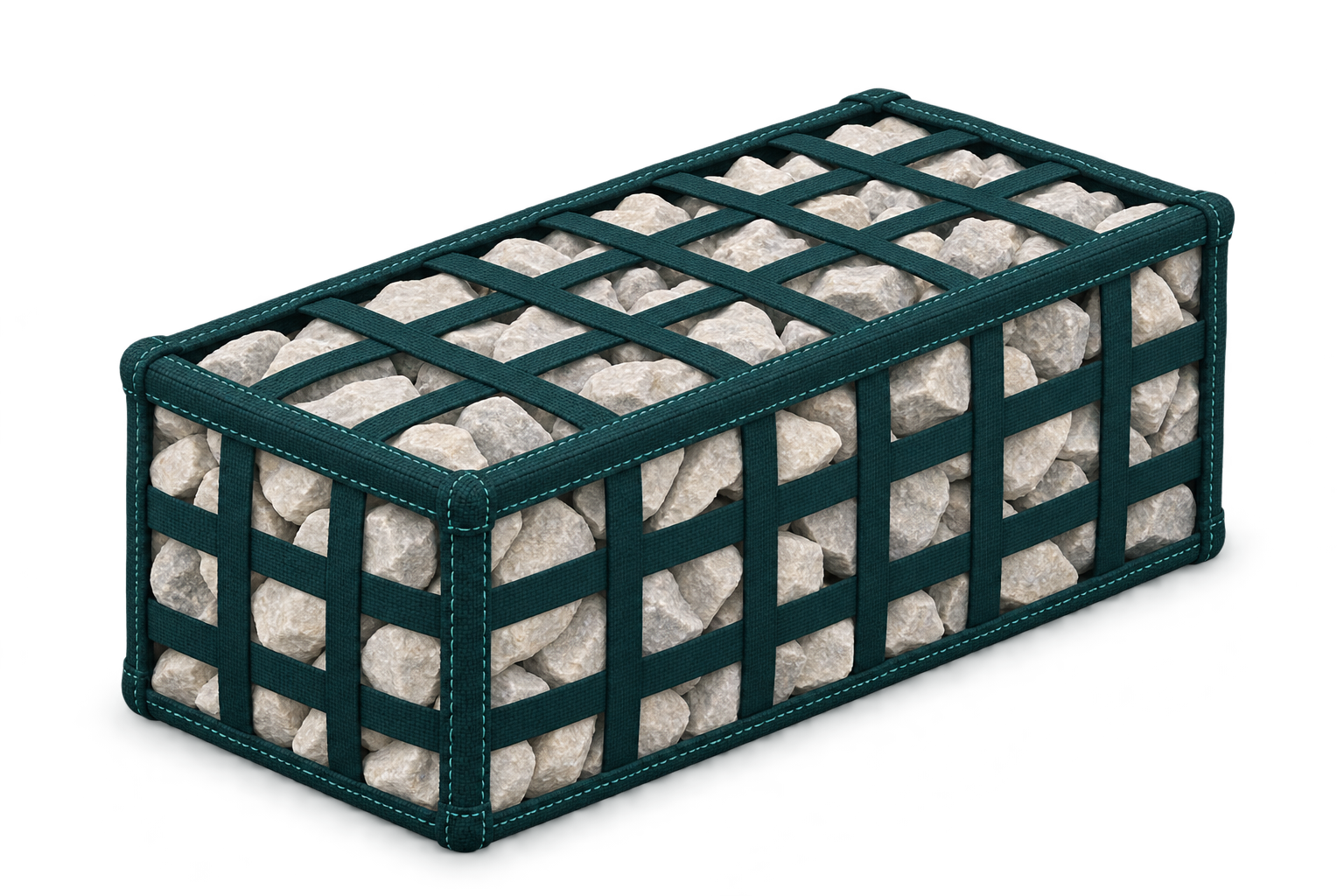
Project-specific containment with reference PET GG200/200 geogrid. Geometry, compartments and connections are specified for the application.
Project-specific containment with reference PET GG300/300 geogrid. A higher nominal geogrid strength does not replace system design.
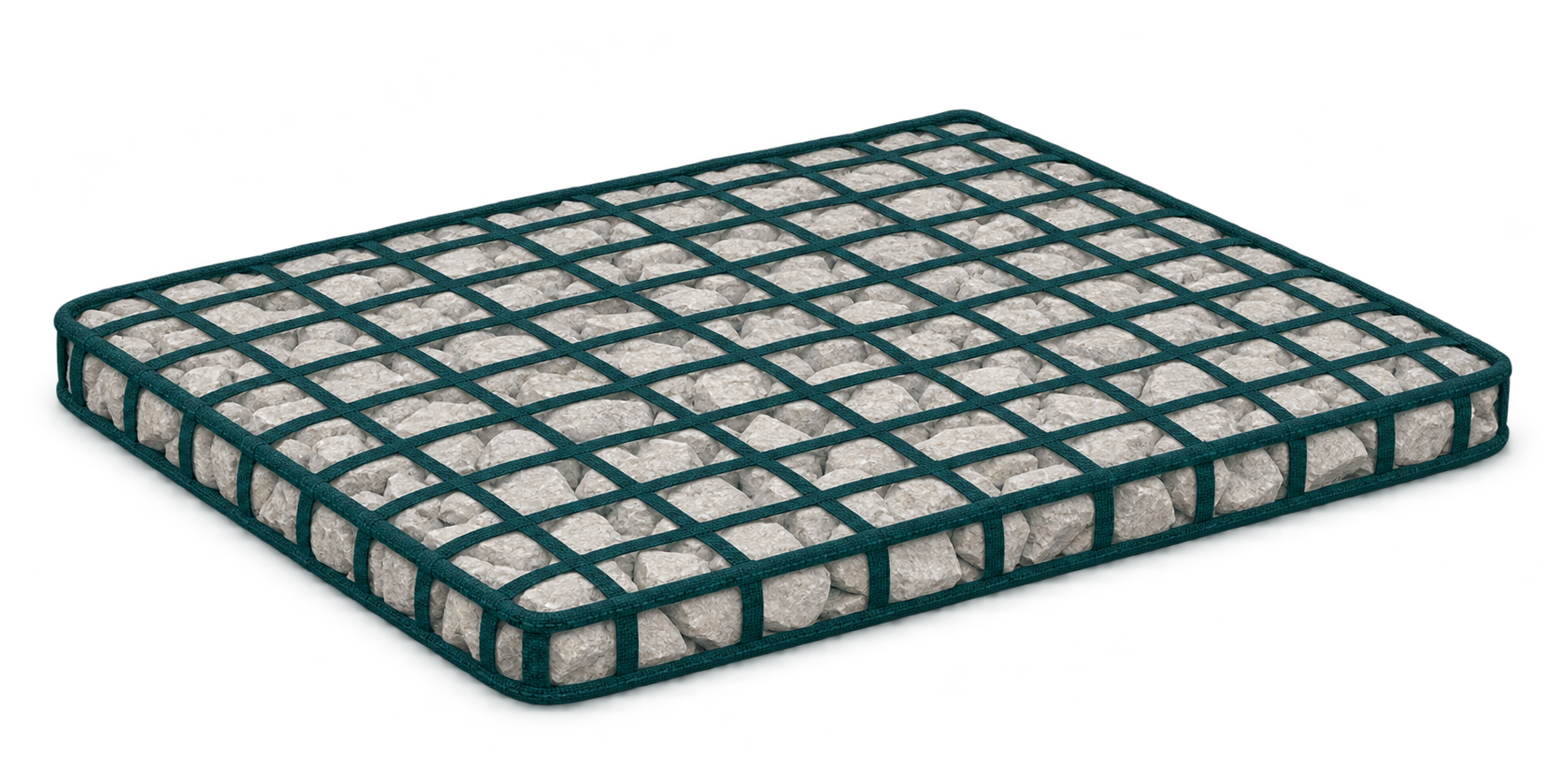
Low-profile configuration for assessed bed, toe and scour-protection applications, using reference PET GG200/200 geogrid.
Low-profile configuration using reference PET GG300/300 geogrid. Thickness, footprint, filters and transitions follow the approved design.
200 and 300 identify reference geogrid grades in kN/m. They are not finished-unit load ratings. Product illustrations are conceptual; dimensions and details are project-specific.
One product family, three engineered filling configurations.
Specified rock retained by the polymer enclosure. Select grading and placement to protect the mesh and joints.
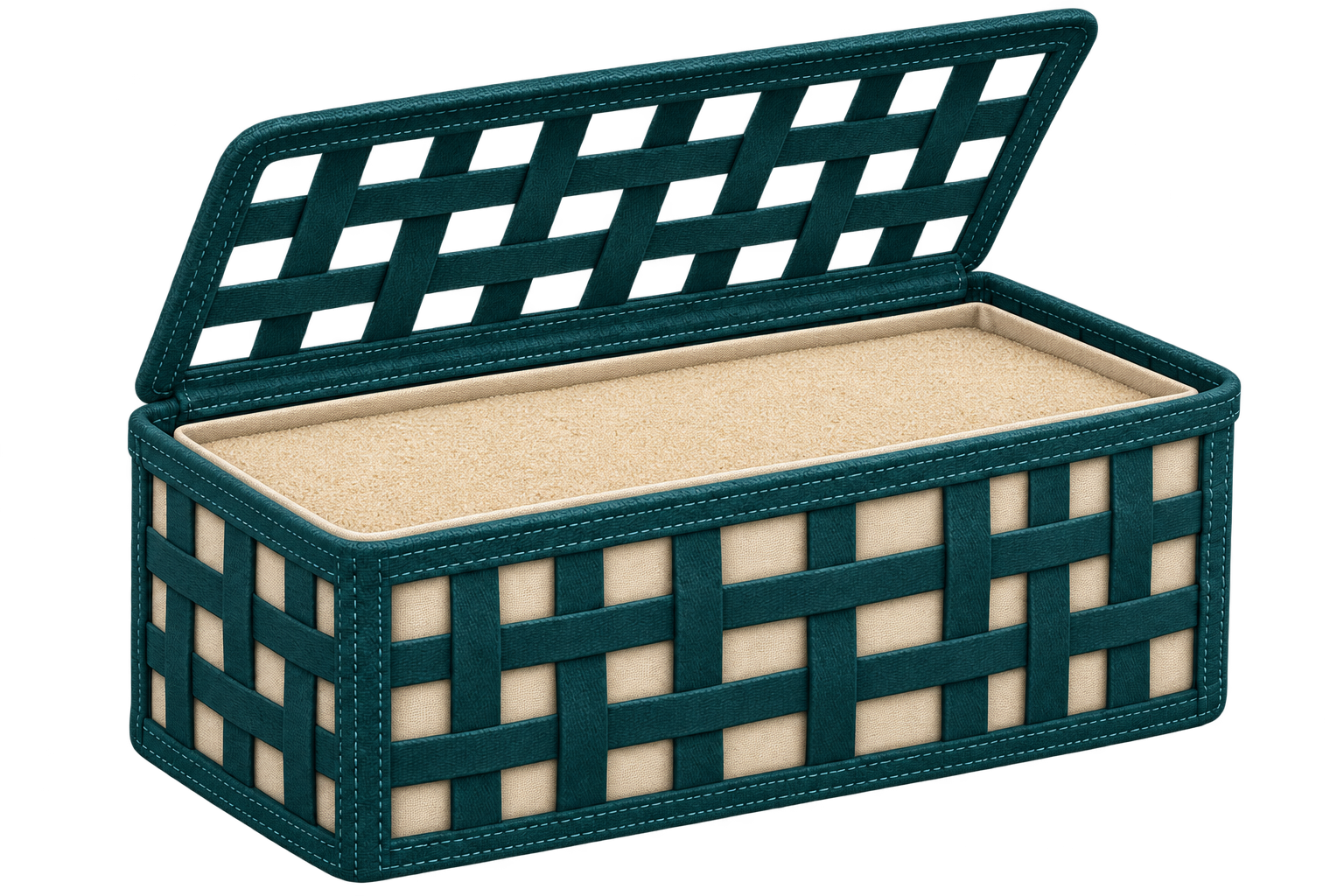
An internal geotextile liner retains sand while providing the designed drainage. Hydraulic filling is planned and controlled.
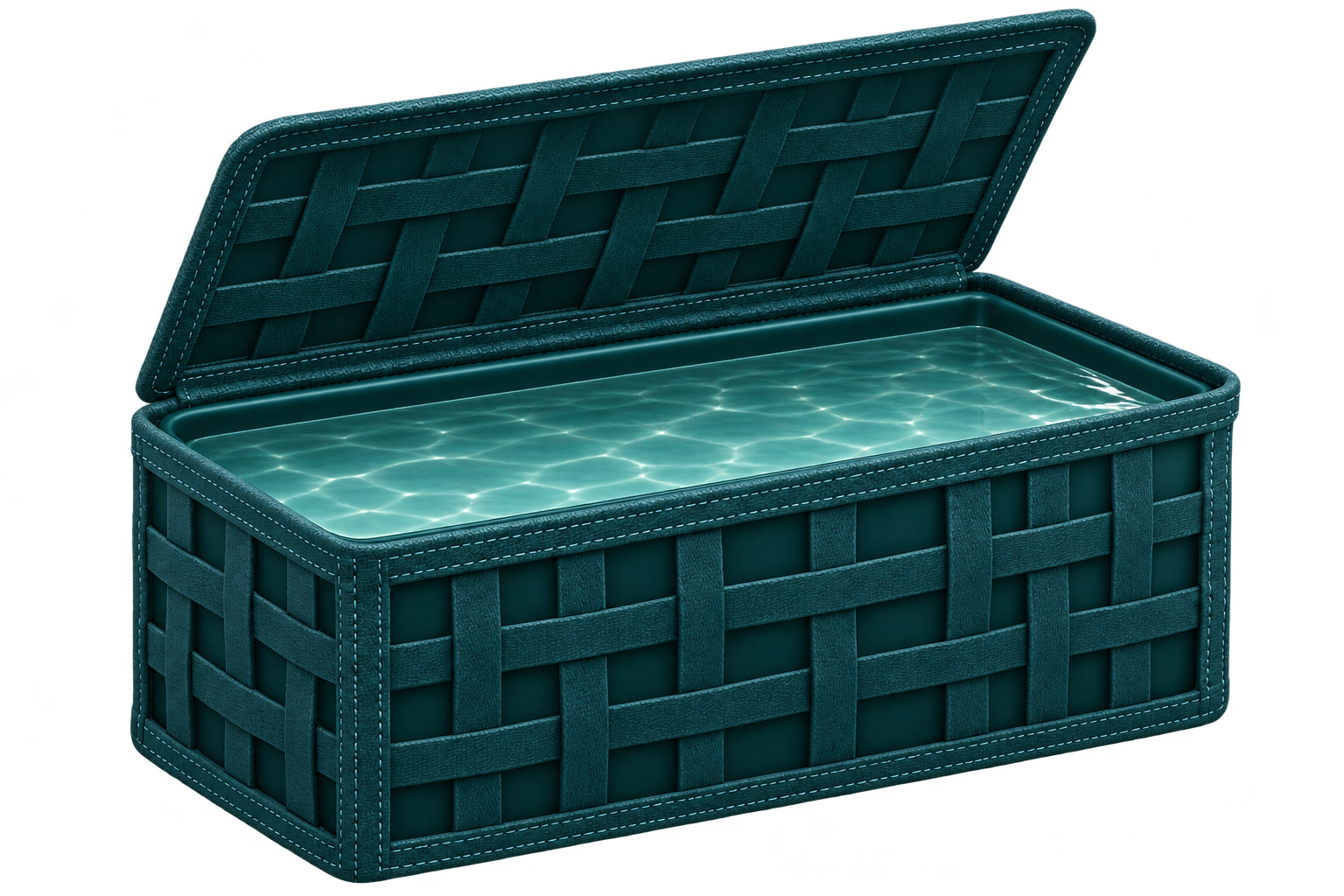
An internal impermeable liner retains water. Ports, closure, buoyancy and stability are checked for the intended application.
Selected views from the Oceanus coastal project archive.
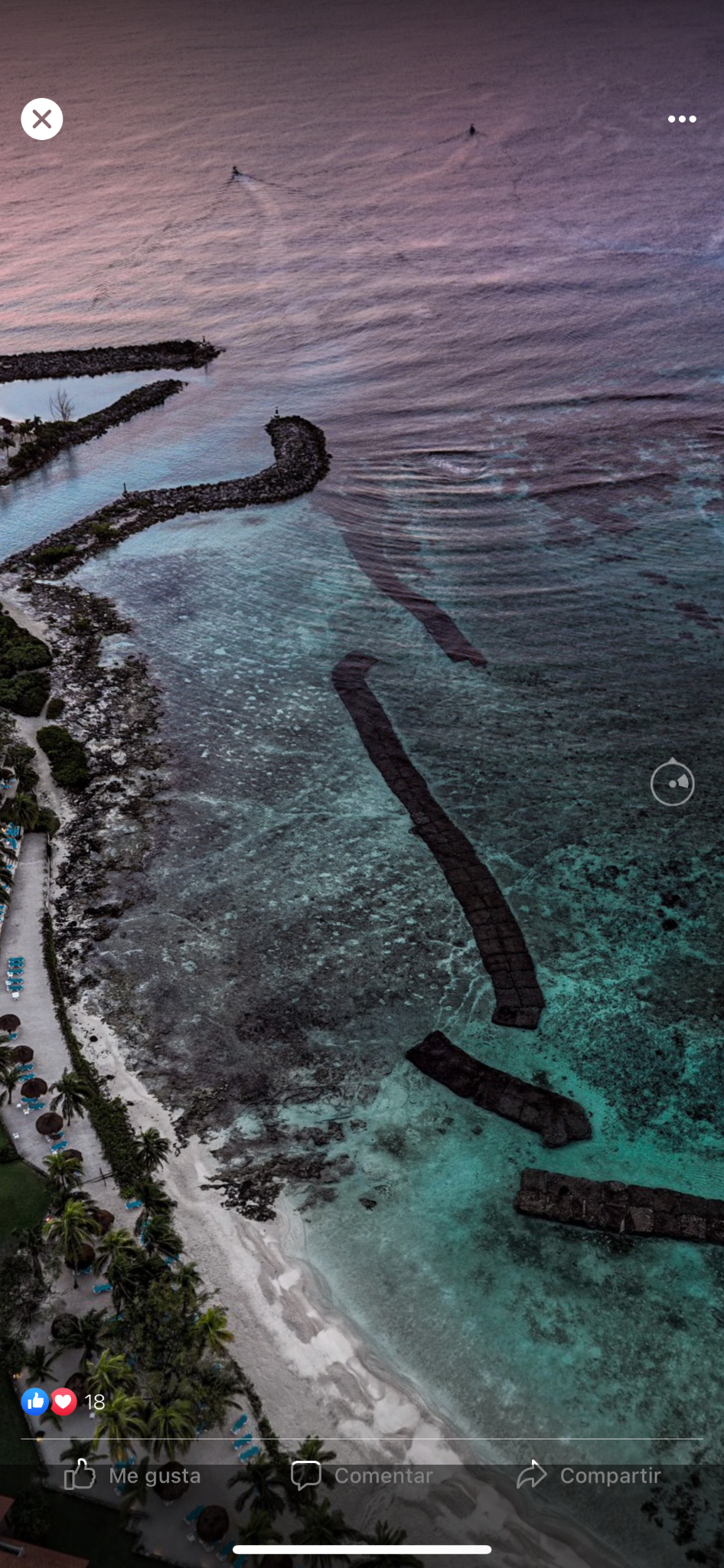
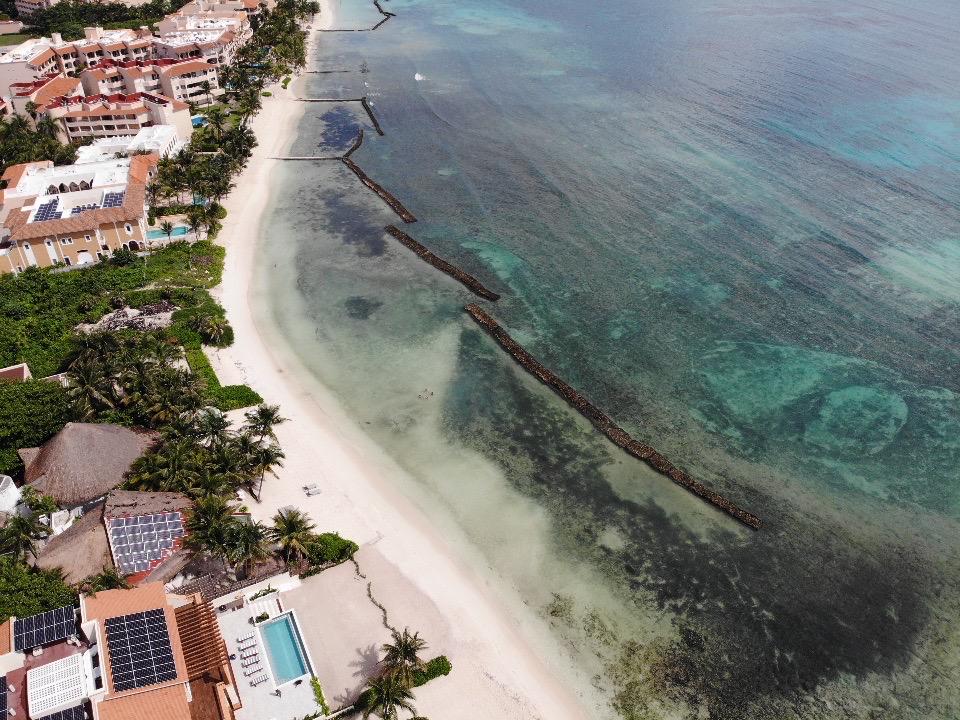
A project record, not a prediction of the result at another site. Site conditions and design determine performance.
Delivered empty. Positioned carefully. Filled for the application. Inspected before acceptance.
Receive the folded unit and check identification, grade, batch, seams and accessories. Record damage before deployment and keep the material protected from sharp contact and abrasion.
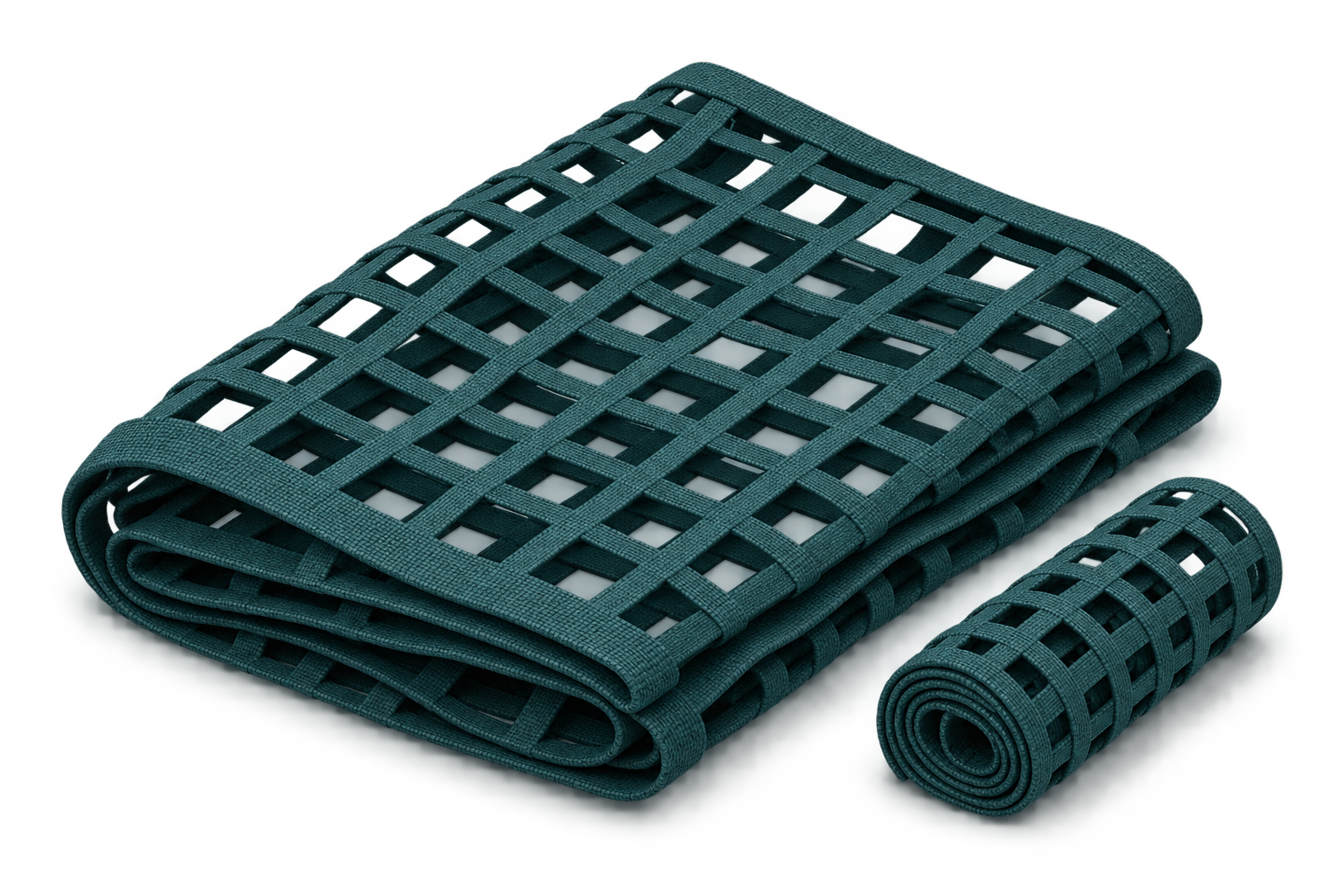
Prepare the approved foundation, filter and toe protection. Unfold without twisting; verify alignment, orientation, compartments and connections. Install the selected liner and filling ports where required.
Use specified rock, or the correct internal liner for sand or water. Fill progressively; monitor geometry, movement, connections, drainage or watertightness. Follow the approved filling and stopping limits.
Specified rock retained by the polymer enclosure. Select grading and placement to protect the mesh and joints.
An internal geotextile liner retains sand while providing the designed drainage. Hydraulic filling is planned and controlled.
An internal impermeable liner retains water. Ports, closure, buoyancy and stability are checked for the intended application.
Close by the approved fabrication detail. Inspect position, geometry, seams, connections, fill retention and settlement. Record photographs, as-built information and corrective work; establish the maintenance baseline.
Concept sequence, not to scale. Filled lifting requires an engineered handling arrangement; geogrid strength is not a pumping-pressure or lifting rating.
Coastal assessment, relevant surveys, material selection, modeling and detailed engineering.
Custom fabrication, logistics, installation planning, supervision and training. Installation may be included in the agreed scope.
Baseline records, inspections, repair planning and long-term maintenance. Sand nourishment can be assessed as a complementary service.
Optionally select one technical document and its language, then send your enquiry. Download only what you choose.
We use your details to provide the resource requested and respond to your enquiry. No newsletter subscription is added.
Share your location, photographs, objectives and schedule. For port supply, include drawings, quantities, fill requirements and the delivery port.


